the cine spirit: reviews

Hot

Post Top Ad

Showing posts with label reviews. Show all posts

Tuesday, September 24, 2019

IMPRISONED Review

September 24, 2019 0
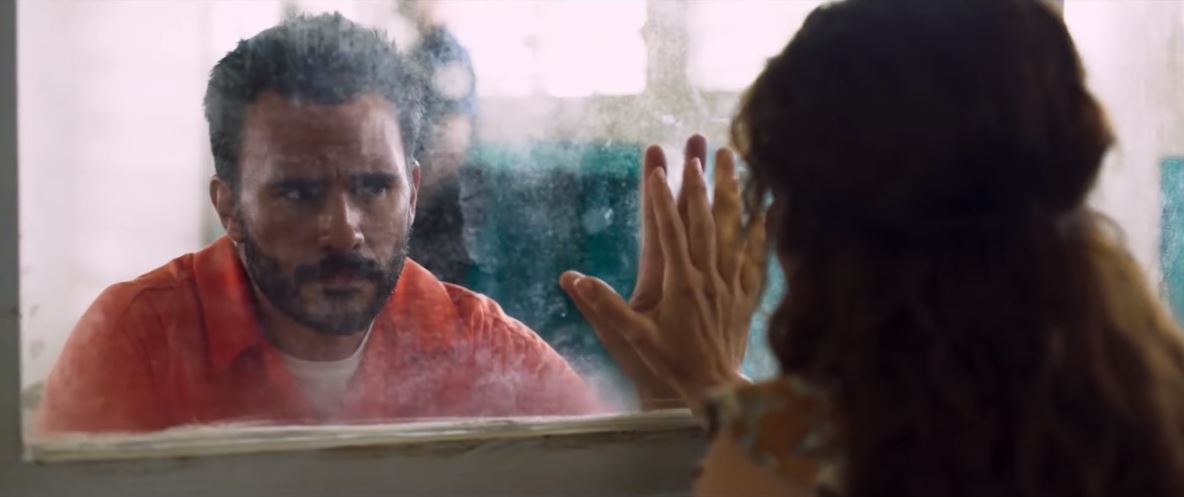
Brandishing a shaved head and goatee, Fishburne plays Daniel Calvin, the resigned previous superintendent of the nearby jail whose life is plainly in passionate and physical ruins. He chooses to return to his previous work environment just before the matured structure is expected to be wrecked, which prompts him to recollect occasions that occurred years sooner (rendered in flashback structure).


It was the point at which he was as yet the jail's swaggering superintendent that he initially experienced Maria (Juana Acosta), the proprietress of a close-by bistro. Even though she addresses him on the wrongs of the death penalty, Daniel is pulled in to her, making his advantage known in none-too-unobtrusive design. In any case, his actual inspiration for needing to draw near to her is increasingly deceptive. We, in the long run, discover that her angler spouse Dylan (Juan Pablo Raba, The 33 and Netflix's Narcos) is an ex-con who has turned his life around. Dylan has a history with Daniel, who winds up resolved to ensure he's sent back to jail where he can get payback.


The following imagined plot mechanics bring about Dylan surely ending up back in the slammer and confronting Daniel's fury. Prompt the unavoidable jail riots, prodded in enormous part by the executions of death-row detainees that occur on a ludicrously visit premise (don't worry about it that Puerto Rico annulled capital punishment almost a century back). One of the film's numerous inadvertently entertaining groupings is a montage delineating the jerking feet of a progression of detainees getting draped that seems to be the grisliest Busby Berkeley move routine ever.

Fishburne infrequently gets jobs this unmistakable nowadays, and there's an endeavor by him and the script to indicate Warden Calvin's perspective, to by one way or another temper his pitilessness and criminal maltreatment of the framework with his complaints. That is a piece eye-rolling.


I'd state there's a superior movie in this material, yet there isn't. A superintendent viciously, lethally encircling a detainee, coercing the prisoner's significant other, and he needs us to comprehend his reasons? Fishburne attempts to accomplish something unobtrusive with him, yet his character's activities talk more intense than his "Les Miserables" agonizing.

Every other person is painted in monochromatic shades — the exemplary, adoring ex-con, the pious however edgy spouse, the grizzled con, the survey watching government official.


If you're considering what he did – well, the remainder of the film takes as much time as is needed disclosing it to you, in one broadened flashback. Daniel's pregnant spouse was inadvertently killed by Dylan (Juan Pablo Raba) during a burglary turned out badly. Dylan served his time and now appreciates an untainted yet humble life as an angler with his better half, Maria (Juana Acosta). At the point when Daniel gets some answers concerning it, he goes to extraordinary lengths to outline Dylan for a homicide he didn't submit, thusly sending the guiltless man back to jail and sentencing him to death by hanging. "I thought I paid for my past, yet it doesn't appear it was sufficient," Dylan tells Maria.


Remembering how minimal most Americans think about Puerto Rico, a U.S. region, it's unreliable to indicate men executed by hanging while at the same time overlooking that capital punishment was canceled on the island during the 1920s. "Detained" doesn't guarantee it depends on a genuine story, however it likewise doesn't prevent anybody from feeling that it may be. The movie merits 5+,


Read More

Sunday, September 22, 2019

MONOS Review

September 22, 2019 0
We first observe these babyfaced subversives under the brutal tutelage of Mensajero (real ex-guerrilla Wilson Salazar), a minor drill sergeant educating them in gunplay on an amazingly cloud-covered mountain. The scene is delightful, and the demeanors hormonal. These are adolescents, all things considered, who are required to put immaturity on hold so they can wind up coldblooded slaughtering machines. Yet, nobody can prevent them from carrying on, and progressively rough and corrupted ways.


The film recommends Larry Clark's on the other hand hectoring and scoffing Kids (1995) as cast with ruthless, horned-up kid officers. Landes and cinematographer Jasper Wolf once in a while pass up on an opportunity to gaze at these hindered animals as they paw at and belittle one another, just as bother and torment the American detainee, Doctora (Julianne Nicholson, gamely going after for gravitas), who is a sort of shell-stunned Patty Hearst figure.

The troop, in the long run, plunges into the wilderness and their shaky brotherhood separates Lord of the Flies-style. Landes here has all the earmarks of being going after for an experiential and unique fever dream — a film about the transformation where the absence of clear objectives and belief system is completely the point. (Mica Levi's startling score, which would one say one is of a couple of imaginative components unquestionably sound, positively assists with the feeling of good disengagement.) The children can't deal with a bovine appropriately, so how might they be relied upon to capability advance a shapeless radical motivation?


The film's title interprets of from Spanish to Monkeys, yet it likewise signals to the hermetic and disengaged world Landes is depicting. Monos distinctly abstains from asking how these adolescents came to carry weapons, who they're working for, why they have a hostage, and what they're intended to do with her. Rather, Landes puts a serious, now and again stimulating amplifying glass on the elements of this fairly undifferentiated gathering of fighters and their instabilities among fellowship and through and through resistance. The film's vivid characteristics intensify its feeling of separation. It's never certain whether these officers are paid or oppressed, regardless of whether they have any interest in whatever reason it is they're serving, and if their demonstrations of resistance are negligible upheavals or the sensible endpoint of some long-running injury.

Along these lines, the film reviews Bertrand Bonello's Nocturama is an investigation of youthful fear-based oppressors separated from any unmistakable feeling of intention, however, Bonello's film was immediately hesitant and suggestive, lodging its inaction in a world-renowned hub of consumerist culture. There are hints of pansexuality among the youthful officers, yet this feels a vital part with Monos' fairly shallow, indulgent riff on Lord of the Flies. Any feeling of contention in the film is tasteful, and whatever significance its elevated environment invokes is as a rule because of Mica Levi's score, a considerably more interesting monster than her impactful work on Jackie and Under the Skin. Levi joins the prattle of bugs and the fighters' birdcalls into her adamantly inconsistent soundtrack, which regularly starts in choral tones that climb into unique turmoil.


This is a movie I've developed to respect more than I appreciate. Landes' and Wolf's symbolism is staggering to watch regardless of whether his script with Dos Santos leaves off a significant part of the content. As Landes investigates the brain research and elements of a gathering of children being approached to grow up excessively quick and too savagely, he diverts a portion of our compassion toward the specialist to the children who are cleared up in something they (and by augmentation, the group of spectators) may not completely get it. the movie merits 6.


Read More

Friday, September 20, 2019

ONE CUT OF THE DEAD Review

September 20, 2019 0
Having now observed "One Cut of the Dead" completely through, I can disclose to you two or three things and hypothesize around a couple of something else. First of all: truly, you ought to likely consider this to be knowing as meager about it as could reasonably be expected. I'm not commonly a spoiler-telephone, however, I value that piece of the movie's appeal originates from the practically impervious quality of secret that encompasses it.


All things considered: "One Cut of the Dead" requires some persistence. It starts as an outwardly level, generally by-the-numbers zombie satire about a low-spending film group who are menaced by zombies continuously while filming a zombie movie. So for the initial 37 minutes, we pursue a gathering of uninteresting, ill-defined characters while they meander and sporadically escape from different shambling zombies in, up, and around a surrendered factory.

This bit of the movie is still, upon rewatch, not incredible. Without a doubt, writer/director Shinichiro Ueda tosses a few gases in his general rage driven type vehicle just by filming his movie's opening section in one constant, continuous take. You may likewise appreciate watching characters go around while disturbed, authenticity fixated director Hirugashi (Takayuki Hamatsu) once in a while springs up, as though out of nowhere, to shout "activity" or drift about "genuine filmmaking: "There is no fiction, no falsehoods! This is a reality!" Still: envision you're watching another person play a nonexclusive first-individual computer game (one of the "Inhabitant Evil" shams, possibly), and you'll likely comprehend why I abandoned "One Cut of the Dead" two years prior.


The soul of this is seen in what we show up as viewing here: a movie about a low-spending zombie horror film that, mid-shoot, is all of a sudden attacked by genuine zombies, which the crazed director welcomes blissfully as the opportunity for some genuine horror – and all shot on one bravura 40-minute take (the "one cut" of the punning title). We get mushy rehashed crash-zooms, savagely persuading execution by the director, yet strangely extended comedy acting somewhere else. It comes full circle with a great yet unstable crane shot.

The principal third is joy. Opening with a phony out, a little film group is making a zombie flick in a neglected water filtration factory, the group getting irritated with director Higurashi (Takayuki Hamatsu) going all Michael Bay and shouting at his entertainer for not being genuine enough. It develops the area was picked because urban legend says it was utilized for human vivification tests during the war. Wouldn't you know it, the cast and team are assaulted by a little swarm of zombies — this is a low-spending issue — and heads, arms, and tomahawks all get officially familiar. For director Higurashi, it's a delight — genuine responses to genuine risk — and for us, it's enthusiastically envisioned, lo-fi butchery, caught in one take which, while it isn't as great as Victoria's, still clears you in the interest of personal entertainment.


Just it takes breathers. There is a peculiar interval where the actors talk about make-up lady Nao's (Harumi Shuhama) self-protection diversion or a static arrangement when the camera is set down as a go head to head follows. These longueurs feel abnormal, yet all is uncovered. After the horror dies down, we rewind to one month sooner. The bloodfest we've quite recently seen is a live TV communicated for the youngster Zombie Channel and we get submerged into the pre-generation of the show. Director Higurashi is a poor quality karaoke video producer whose adage is "I'm quick, modest however normal" and we joyfully watch as he amasses his diverse group just as his significant other (uncovered to be Shuhama) and surly high school little girl (Mao) who get reserved into the pandemonium. The movie merits 5+.


Read More

Thursday, September 19, 2019

RIOT GIRLS Review

September 19, 2019 0
As an introduction grouping structured as a comic book clarifies, a "dangerous squandering illness" has risen that objectives just grown-ups. The oldsters are largely dead when our story starts, and in their nonattendance, the town of Potters Bluff has been cut up by a stream going through it: The west side is led by the Titans, who wear their secondary school letterman coats and stick to muscle head inspirational proverbs; the east side, past their standard, is associated uniquely by a solitary path connect. There, a pack of youthful survivors is remained careful, in what resembles a distribution center size second-hand store, by Jack (Alexandre Bourgeois).


The athletes, normally, make camp in the old secondary school, where Jeremy (Turbo Kid star Munro Chambers) is the preeminent pioneer, with Todd (Darren Eisnor) his lieutenant. Chambers' suitable hamminess is about the nearest the cast comes to winking at the group of spectators; somewhere else, exhibitions are in some cases awful with no noticeable layer of incongruity. Presented with an unmistakable Cobra Kai reference, the Titans are one-dimensional bullies who even get their fake Scorpions shake song of praise. Yet, besides threatening their kindred residents, it's not exactly clear what their plan is. If they have different children subjugated and developing nourishment or are compelling them to go on risky missions to look for provisions, the movie doesn't show or allude to it.


Some entirely slender entanglements cushion out the young ladies' salvage endeavor, with one sore-thumb special case: Even in a film whose stakes are life-and-demise, the endeavored assault of Nat at a checkpoint appears to be strange — increasingly reasonable for a Red Dawn-style story that pays attention to itself more. For what it's worth, the scene appears to be available just to fill in as an imagined explanation behind Nat and Scratch to battle quickly.


With blades, crossbows, homerun sticks, and the odd weapon available to them, these children must steel themselves to the truth that endurance isn't an assurance. Where Jeremy needs his officers to utilize power to win regard from (sow dread into) their unfortunate casualties (something Darren Eisnor's combative techniques master Todd pines for and Evan Marsh's tangled superintendent Devon rejects), Jack leads with affection and equity to really have the regard of his companions and realize they'll want him. Other than Jeremy and Todd, in any case, no one is set up for what they'll need to do. Jack wouldn't like to hurt a bigger number of individuals than he needs to and because Scratch can be heartless when those she thinks about being compromised doesn't mean she's agreeable in that job. Now and then you're essentially left without a decision.


Give this world more opportunity to uncover its topics, elements, and history and you could plunge into the Lord of the Flies idea of children push into obligations they aren't exactly full-grown enough to deal with. As seems to be, things can feel hurried and truncated with scarcely an eighty-minute runtime. Vuckovic uncovers the ideal medium with which to develop what's on-screen with her comic book style changes between scenes. This isn't to imply that things are hard to pursue. The abridged preface gives the setting and the larger high contrast type of good versus malice encourages us to hit the ground running. It's simply hard to completely contribute when a lot of what happens must be advised as opposed to appeared to spare time. Inspiration is regularly supplanted by drive.


Uproar Girls doesn't disillusion in the commotion office, and as a meta-tale about female strengthening in an inexorably compromising "men's reality," this wild and wooly take on adolescent hoodlums past would make Furiosa herself cheer. Not all things click, specifically, some wooden discourse, yet Vuckovic's tale has no lack of exemplary Eighties needle-drops and a lot of affection for rebels all over, regardless of their sexual character or ability with crossbows. Young lady control without a doubt. The movie merits 5+.


Read More

Monday, September 16, 2019

SCARBOROUGH Review

September 16, 2019 0
The film presents two accounts of two couples occupied with unlawful trysts, and this all occurs inside a similar terrific inn in the northern oceanside town of the title. In the two stories, an educator is having intercourse with an adolescent understudy. Be that as it may, in one storyline the child is a young lady, Beth (Jessica Barden, from The End of the World, and really 27, in actuality), having sex with her craft educator Aidan (Edward Hogg); in the second, the understudy is a kid, Daz (Jordan Boger, from Peaky Blinders, likewise in his 20s), coupling with a female instructor, Liz (Jodhi May, who ought to have would be advised to breaks at this point, thinking about her ability).


The two stories that unfurl in Barnaby Southcombe's squeamishly climactic show are not simply parallel connections; they are, at first at any rate, for all intents and purposes identical representations. In the two cases, an instructor has stolen away for a secret end of the week with one of their students. Hesitant, saved Liz (Jodhi May) shares a suite with 16-year-old Daz (Jordan Bolger). In the interim, Aiden (Edward Hogg) has sneaked away with Beth (Jessica Barden), a jazzed teenager who appears to be considerably more youthful than her years. Southcombe deftly strings together the two stories with echoes in the exchange and the area, the fusty old relic of Victorian appropriateness, the Hotel Metropole. The dividers of the inn appeared to surround each couple as the film advances, uplifting the inconvenience for the group of spectators, which is constrained into the vicinity with something that foggy spots the line among sentiment and misuse.

With discourse and plot gadgets rehashed crosswise over the two stories, the parallelism is intended to make you consider how distinctively we respond to the sexual misuse of a kid versus a young lady. Albeit, even that expected complexity feels dated and guileless, and both the grown-ups seem to be narrow-minded abusers, regardless of whether they do have their own, as far as anyone knows moderating backstories. Also, the contort uncovered over the most recent 10 minutes further undermines any sympathy or understanding we may have had, transforming this into some sort of unreasonable profound quality story of barbarous, over-amusing destiny.


I know nothing of the writer Evans or her motivation, which gives "Scarborough" the essential expel from any semblance of Woody Allen and Luc Besson, whose preferences are well-pitched and whose movies frequently "standardize" such "consensual" couples.

That gives us a chance to think about what's happening, what presented to them all here, regardless of whether we can figure the sensational turns that will point the narratives towards their goals.

May carries a weak delicacy to Liz and gives us a chance to see the adolescent that one remembers when associated with someone a lot more youthful. She has a discouraged quality however gives us flashes of jazz when she's with Daz and not anxious about… everything.

Hogg's Aiden is less concealed. We see such issues as vampire-like for a reason — the more seasoned individual draining the adolescent out of the more youthful. Is this geeky/craftsman 30ish instructor getting the "hot young lady" he never included a shot inside the secondary school? What else could be in play?


The children? They're here for the experience, the play-acting at being a grown-up with none of the obligations and only an open future before them. They have no clue, both of them. Bolger gets over Daz's immaturity and powerlessness to see past the following dinner or "shag," and Barden amazes with a Lolita-ish local sly. Beth might be tipsy, may approach her secondary school mind to endeavor controls no grown-up would fall for. Be that as it may, she recognizes what she needs.

In any case, the exhibitions are solid and loaded with energetic conviction, which fairly directs the dangerous angles, while the utilization of common light and crude shoreline surfaces succeeds in creating some climate. The movie merits 5+.


Read More

Saturday, September 14, 2019

THE SOUND OF SILENCE Review

September 14, 2019 0
Director Michael Tyburski, who co-composed the script with Ben Nabors, is on the whole correct to perceive how solid assumes a job in individuals' prosperity, however it's out and out bizarre to consider a character who's centered around minor household unsettling influences in a city where the commotion contamination — an uproar of vehicle horns and alarms and affront yelling outsiders — pours in through the windows and paper-slender dividers to wallop New Yorkers' eardrums at painfully inconvenient times.


"The Sound of Silence" approaches, however, opposes grasping the funniness of its reason. Rather, the movie expects the low-difference, dun-and-dim palette of Woody Allen's less-interesting New York films (movies like "Another Woman" and "Hannah and Her Sisters"). Ensemble originator Megan Stark-Evans outfits Sarsgaard in moth-shaded tweeds and coarse-looking whiskers, so he everything except mixes into the boring looking structures where the story unfurls. It's the sort of frightful story wherein one completely hopes to hear the despairing stylings of arranger Carter Burwell (the genuine score, by Will Bates, is similarly dreary), and it would astound nobody if the film finished with Peter cutting his wrists or putting his head in a gas broiler.


As such, "The Sound of Silence" is a film for McSweeney's perusers and people who tune in to "Science Friday" on NPR: scholarly in a marginally out-there way, strange enough to warrant raising at an evening gathering and everything except ensured to remain semi-cloud — and in this manner sure to keep up a level of fashionable person cred for those who've seen it. But, the movie feels woefully undernourished for something that started as a short (2013's "Palimpsest"), as though the makers chose to make it longer yet not any increasingly momentous or fascinating. (They likewise fail to tissue out the hints of New York City, in spite of having earned the Dolby Family Fellowship and an uncommon possibility among nonmainstream players to blend the film in Atmos sound.)


There's no much going on here, either specifically or narratively; even Ellen's obvious closest companions (Alex Karpovsky and Tracee Chimo) show up precisely once to give an essential piece, with one of them perusing so anyone might hear from a New Yorker article about Peter. So keeping things enthusiastic turns into the cast's duty. Sarsgaard settles on the easy way out, making Peter the kind of over the top maverick for whom casual discussion appears to be everything except incomprehensible; it's an exact presentation, yet effectively processed initially. That doesn't give Jones a lot to work inverse, and Ellen's request that Peter isn't dreadful, even as her description of all that he says and does sounds bounty frightening (to avoid anything related to what we see), needs conviction. Expert character actors like Austin Pendleton and Bruce Altman show up quickly to typify generalizations (benevolently guide and unfeeling business executive, separately), and The Sound Of Silence just truly takes steps to break out of its schematic shell once, when Peter acquaints himself with the editorial manager of a key scholastic diary and gets treated as though his huge paper on New York City soundscapes is what could be compared to QAnon. This improvement recommends an energizing new bearing for the film. Be that as it may, by at that point, it's everything except over. The movie merits 6+.


Read More

Thursday, September 12, 2019

SATANIC PANIC Review

September 12, 2019 0
"Satanic Panic" is Stardust's directorial debut, even though she has broad experience off-camera in horror films. She realizes the domain well. Created by Fangoria Presents, the film is intended to be a return—or rejuvenation—of the B-movie gore-fests brought out by Fangoria during the '80s and '90s for a crowd of people who couldn't get enough. With "story by" Ted Geoghegan and Grady Hendrix, "Evil Panic" is genuinely uneven, with wild tonal movements, and some clumsily organized minutes helped up by a wiped out—and once in awhile clever—a comical inclination. Two or multiple times I roared with laughter. The script over and again calls attention to the immense class contrast between the coven individuals in their chateaus and hands-on Samantha, and these minutes give the film its nibble and cleverness. (Indeed, even busy being pursued by a gathering of Satanists, Samantha has the sound judgment to ask a sitter who harbors her in a close-by house, "What amount does keeping an eye on?")


Griffith's Sam is a great "last young lady," shielded however clever when it checks. Puttering through a well off suburb with an armful of oily cardboard boxes and no cash for gas in the film's opening scenes, she's being exploited by her progressively critical collaborators, who realize what the credulous Sam is going to discover: The wealthy don't tip for poo. Be that as it may, Sam is additionally bold enough to return into the chateau where a grim, mustachioed one-percenter has "overlooked" to tip and request that he hacks up the five measly bucks she'll have to get back home toward the part of the arrangement. A lot amazingly—and the group of spectators' pleasure—she's jumped in on significantly more than an area watch meeting. Furthermore, lamentably for Sam, being an original last young lady and all, the custom she's interfered with requirements a virgin.


A significant part of the film's fun originates from Rebecca Romijn's exhibition as Danica Ross, the coven's breathtaking head witch. Cold and stooping, she sashays over the screen in red silk robes to coordinate her lipstick and nail trim, keeping her detestable levelheadedness notwithstanding when she's entrusted with chowing down all in all human heart she keeps in named Tupperware in her ice chest. Romijn additionally plays pleasantly off of character entertainer Arden Myrin—whose exhibition as malevolent subordinate Gypsy denotes the film's comedic feature—just as her genuine spouse, Jerry O'Connell, who shows up as Danica's medicated out husband. Every one of the three of these actors is prepared enough to know how and when to temper even a wide presentation, however, the equivalent can't be said for the film's young cast, which battles with adjusting the tedious exchange and childishly one-note direction.

A great deal of consideration has gone into the bloody functional impacts, huge numbers of which are gross as well as imaginative and clever. Characters bite the dust in abnormal and inventive ways. My most loved was a scene including an enormous corkscrew tie on dildo-device—it's as frightening (and diverting) as you would envision.


In any case, there's an inclination that more could have been made of the majority of this, that something's absent in the execution. What may miss is a superseding mind-set of all-out free-wheeling madness. "Sinister Panic" is best when it lets its hair down when it gives itself wholeheartedly to the silly, the engaging, the senseless and gross joined. However, it doesn't push any envelopes, and pushing envelopes is what it's about! The genuine envelope-pusher here is Romijn. Her exhibition, at the same time loopy and undeniable genuine, demonstrates what's absent in "Satanic Panic" all in all. The movie merits 5+.


Read More

Wednesday, September 11, 2019

NIGHT HUNTER Review

September 11, 2019 0
Opening with a cheeky evening time pursue through blanketed woods in which a crying, scarcely clad young lady is running from something terrible, and pursued by a residential trade in which Cavill's separated from father lawman schools his online-dependent 13-year-old little girl (Emma Tremblay, "Supergirl") in how to tell who may be an internet-based life finessing creep (no companions in the photographs), the movie primes us to accept "Nomis" may be a drawing in spine-chiller for our upset however progressively stirred occasions.


Fortunately, no one has yet thought of bundling entire periods of a Peak TV arrangement as a component film, however, if they had, the outcomes may look something like this uneven sequential executioner spine chiller, the element presentation of British writer-director David Raymond. It isn't shy of thoughts, however, the moderately concise running time gives little chance to any of them to form into an intelligent story, to avoid anything related to any similarity to character advancement that may have made it locks in.

That feeling is immediately dispersed, in any case, by a ridiculous arrangement wherein a characteristically prurient would-be creep believes he's going to bed a performatively guiltless youthful thing (Eliana Jones, "Hemlock Grove"). Truly, he's fallen into a motel-room trap, "To Catch a Predator"- style, laid by Jones' character, in all actuality, an extreme vindicator, and Sir Ben Kingsley's resigned judge Cooper, who employs a bat, binds, and technical education. Discipline from these two isn't presentation or capture; it's PCP helped mutilation and coerced compensation to the imprint's earlier exploited people.


The head-phony to retribution madness is jostling, no doubt, however it additionally conveys the whiff of something promisingly engaging, though increasingly offensive and cleansing. Be that as it may, even this isn't sufficient for Raymond, who at that point sends Cavill's exemplary crimefighter into a confined house to protect abducted young ladies being held by a whimsically hyper, rationally insecure character named Simon, played by Brendan Fletcher in an exhibition that can beneficently be named "uncontained."

We should pull for either Marshall or Michael, particularly given the over-improved wrongdoing measurements that Michael presents to Marshall: he guarantees that 80 percent of sex guilty parties re-annoy, however, a brisk Google recommends something else. In any case, Raymond and the posse don't give us numerous motivations to identify or even care about either group, not past Cavill and Kingsley's well-conveyed charms. In all actuality, that might be sufficient for certain watchers, particularly since Cavill is regularly filmed with painstakingly mussed-up hair, a logger facial hair, and moved up sleeves … notwithstanding when he's outside … in the winter. What's more, Kingsley's mild-mannered line conveyance is a demulcent after such a significant number of scenes of Fletcher, in character, running roughshod over poor Daddario, who has the unpleasant assignment of holding with Fletcher's irredeemable lowlife.


In any case, that is the issue with "Night Hunter" more or less: Raymond invests so much energy proposing that his characters and their situational risk are muddled that he never really makes them entangled. The youth disregard that advises Simon's character is for the most part utilized as a plot gadget, similarly as there's nothing considerable to back up the welcome card-commendable discourse that Marshall provides for his web-based social networking dependent high schooler little girl Faye (Emma Tremblay): "The individuals I pursue live in obscurity, and I could see them actually effectively until you tagged along. Since ... you are the light." I don't know where the producers of "Night Hunter" shrouded that light, yet it sure isn't in their movie. The movie merits 5+.


Read More

Tuesday, September 10, 2019

IT CHAPTER TWO Review

September 10, 2019 0
Twenty-seven years after the Goonies-arched undertakings of the primary film, the previous individuals from the Losers' Club from Derry, Maine (presently played by another, adult cast), have gone their different ways, everything except overlooking the pledge they swore about their ghoulish youth foe: "In the event that it ever returns, we'll return as well." Each has their own life, although the past still frequents them. Bill (James McAvoy) is a mainstream writer who has an issue with endings; Beverly (Jessica Chastain) has swapped an injurious dad for a similarly dangerous spouse; Ben (Jay Ryan) is as yet lovelorn regardless of redesigning himself as a tore example of overcoming adversity; Eddie (James Ransone) has withdrawn into hazard appraisal; Richie (Bill Hader) has channeled his instabilities into standup parody; and Stanley (Andy Bean) lives in dread of his youth bad dream returning. Just Mike (Isaiah Mustafa) has remained in Derry, anticipating a reverberation of previous horrors that will call his confidants to “come home, come home”.


Things start promisingly with a nostalgic gathering that reunites the old pack in a Chinese café, laying the table for what is to come. An experience with underhanded fortune treats before long transforms into a shudder some set-piece, the tangible chills of which are instantly undermined by a consoling result choke ("Can we get the check?"). This is an intermittent figure of speech: at whatever point dread backs its terrible head, humor is quickly conveyed to rebalance the cheery air, undermining any certified feeling of fear. The main mammoth may benefit from trepidation, however this movie (like its ancestor) wouldn't like to unnerve us past conveying the odd shock. For all its dim insider facts (stifled blame, savage homophobia, post-horrible amnesia) and dreams of sewers brimming with dead kids, the film holds a standard popcorn reasonableness, as carnivalesque as Derry's celebration carnival.


It's Mike Hanlon (Isaiah Mustafa), the main African American in the posse and the just one of the Losers as yet living in Derry, who issues the misery call that brings home the old group, including Stanley Uris (Andy Bean), a bookkeeper who's not as geeky as he looks, and Eddie Kaspbrak (James Ransone), a hazard opposed depressed person till the end. It's these seven who must hunt out and demolish It, a substance with the ability to show the individual dread that frequents every one of us. Furthermore, they can just do it together. In these vexed occasions, that is implied as inspire.

Director Andy Muschietti is back in charge, having earned the scope to tissue out the story. Some portion of that includes not just indicating where these characters are in their lives yet thinking of a valid clarification for what might bait them back to their Derry, Maine, main residence and the unnerving test they should survive.


The parity of narrating versus fun-house showy behavior tips more towards the last here than appears to be carefully important – particularly in an image that is just one reel short of three hours, with a lot of degree for both. In any case, while huge open doors are missed to tackle the story's epic potential, time sure flies when Pennywise and his different change inner selves slither out of the woodwork.

For a decent hour in the center, every one of the Losers must part to stand up to their evil presences without any help, implying that we're struck at regular intervals or so by whatever outré nebulous vision the impacts group need to toss at us next – including one mammoth hag, roof stature and legitimately frightening, and a range of lesser jack-in-the-crate boogeymen.


When "It Chapter Two" reels toward the Losers' definitive fight with Pennywise, the film has been penetrated by a feeling of history repeating itself; it's a mess less startling or funs the second time around. When the gathering must invade another level to Its underground sanctuary, one of the Losers poses a conspicuous inquiry: what's hanging tight for them underneath? They don't have a clue, yet their bond and their courage drive them on. Concerning that subsequent level, it looks simply like the first. Slightly more established, somewhat greater, and loaded up with every one of the feelings of trepidation they've needed to look previously. The movie merits 6.


Read More

Monday, September 9, 2019

MS. PURPLE Review

September 09, 2019 0
Ms. Purple works best at its generally held. In Kasie's tranquil thought, Chu uncovers the weight upon her character's shoulders through non-verbal communication and tired eyes. Kasie gazes thoughtfully at palm trees against a pink sky, and when she accommodates with Carey, the two just fall into old examples. They have the hesitant, nonverbal correspondence of individuals who can be clumsy with one another yet know each other all around ok to excuse without the requirement for noisy, weepy tragic accounts; that they're talking again is sufficient. Minutes like this vibe bona fide and they're expanded by Ante Cheng's rich, meandering handheld camerawork, which hues face in neon signage reminiscent of Wong Kar-wai's coordinated efforts with Christopher Doyle. In one extraordinary scene, the film intercuts Kasie falling at work with a flashback to silently pass on the passionate toll of thinking about Young-Il.


Be that as it may, Chon never appears to be alright with naturalistic perception. Like the unmistakable, fierce nature of 2017's Gook, his excitement for pompous emotional clash double-crosses him. Irate upheavals appear to emerge out of unadulterated need as opposed to as a development of packaged feelings, and in a moment, individuals start reviling or breaking a jug to use as a weapon. Nuance disperses as the film handles for something more intense and progressively self-evident, which makes the characters look increasingly like mechanical moving parts. Indeed, even scenes where Kasie remains before the sea or moves her fingers through a beam of light feel dull in their reluctant attractiveness, a fabricated enhancement for what ends up being fake dramatization.

The film parts its consideration between the kin's warm yet moderate moving reconnection and the maybe hazardous stuff they get up to when they're separated. Kasie is getting to be something of a kept lady with Tony (Ronnie Kim), a man who preferences taking her to parties; left to his own gadgets (and maybe, however, it doesn't appear, feeling the fallout of some substance misuse), Carey keeps an eye on his dad in flighty ways. He wheels the sickbed outside to get some sun, at that point out onto the avenues of their Los Angeles neighborhood, conveying him up to housetops and into web bistros.


We presume something emotional will occur on one of these fronts — when Tony purchases Kasie a handcrafted hanbok (a Korean conventional dress), it's unmistakable he believes he possesses her — however Ms. Purple is far less plot-driven than its antecedent, and progressively intrigued, in an unpushy way, in the elements of its little family. Chon and Chris Dinh's screenplay once in a while explains what Kasie is feeling, however, the pic's relationship with her mental state is solid: Lenser Ante Cheng, who shot Chon's Gook in fresh monochrome, cast a rich spell when Kasie goes out into the night, with hues and surfaces reminiscent of Christopher Doyle's work with Wong Kar Wai. Step imprinting in certain scenes underlines her separation from the world she winds up living in, while serious vignetting in shots close to Young-Il's sickbed recommend the degree to which thinking about him devours her vitality. Rehashed shots of disconnected palm trees will be comprehended close to the story's end, which makes a few things express while leaving bounty for the watcher to envision.

In any case, those sections are continually welcoming in tangible terms, with DP Ante Cheng loaning an anxious, desolate comeliness to the frequently nighttime pictures. Abetting his frequently striking shading palette are the commitments of generation originator Bo Koung Shin and costumer Eunice Jera Lee. The bass pound and disco lighting of Kasie's expert gathering milieus are offset sad strings in Roger Suen's unique score.


Regardless of whether you may now and then wish for somewhat more mental understanding into their characters, the actors are generally excellent. Chu and Lee both effectively support groupings where we're intended to peruse the maps of the kin's spirits sans any accommodating exchange. Even though not in their group, "Ms. Purple" targets something of the wounded sentiment of estrangement and apathy that Antonioni made his name on (most eminently "La Notte" and "L'Eclisse"). The way that it even arrives in a similar ballpark without becoming excessively self-important or mannered — however, it's, in fact, a tad bit of both — is excellent, not least for being so out-of-step with any current cinematic vogue. The movie merits 6.


Read More

Sunday, September 8, 2019

NEXT LEVEL Review

September 08, 2019 0
Marshall (Henry Cavill) is a hunky cop who part from his significant other because, in the custom of many film investigators before him, he just minds too damn much about getting psychos. His nearly young girl, Faye (Emma Tremblay), endeavors to cut her dad's lack of approachability, addressing him like a grown-up case manager, urging him to open up about himself. In one shockingly piercing scene, we're permitted to coolly see that Faye has set up her dad's extra single man cushion from damnation while he's off chasing the executioner of the day. Faye is not any more acceptable than any of different generalizations occupying Night Hunter, however, Tremblay is the one actor here who advises her job with human conviction. (Additionally, you may regard Raymond's limitation for not setting Faye up as an objective of one of Marshall's adversaries.)


Cavill isn't such a great amount of awful in his job as he is absent, which is reasonable given that Marshall has been composed with even less character than expected for the saint of a cops-and-pervs story.  As what's left is a man strolling through a job, attempting to convey shoddy rate exchange with a deception of desperation. As an ex-judge turned vigilante tracker of sexual stalkers (no joke), Ben Kinglsey is on the equivalent scholarly, I-know-I'm-classing-up-this-joint autopilot that portrays a significant number of his exhibitions in VOD schlock, as is Stanley Tucci as Marshall's unrivaled. Alexandra Daddario attempts to breathe life into her criminal profiler, yet the character is an abstract of plot gadgets, a wellspring of the article who transforms into a maiden in trouble lastly an affection intrigue.

Opening with a brazen evening time pursue through cold woods in which a crying, scarcely clad young lady is running from something terrible, and pursued by a residential trade in which Cavill's separated from father lawman schools his online-dependent 13-year-old little girl (Emma Tremblay, "Supergirl") in how to tell who may be an internet-based life finessing creep (no companions in the photographs), the movie primes us to accept "Nomis" may be a connecting with thriller for our troubled however progressively stirred occasions.


As though all that wasn't bounty to fill any wrongdoing movie's plate, Raymond replenishes on additional by showing Simon isn't working alone, something we make sense of quicker than the police does on account of Fletcher's spitting, raving turn. Presently we have the figure of speech of the secretive, game-playing string-puller (and who it may be), however, pause, there's additional! At the point when unsocial Cavill and unruly Kingsley are constrained into uneasy collusion — One enjoys the law! Different rejects it! — we get the cattle rustler contrary energies figure of speech, too.

As "Nomis" ventures up the pace like a sprinter losing equalization and falling forward, the adages heap up and plot focuses fly at us progressively like shaky cuts at holding our enthusiasm than normally tense improvements. Now and again Raymond's cross-cutting is mysteriously befuddling, recommending associations between characters that aren't genuine, and twitching us out of recently settled pressure to set up the more simultaneous peril.

The impact of all the confused altering isn't simply weakened tension, yet also practically bizarre execution incoherency crosswise over numerous characters; now and again Cavill is all apathetic watchfulness, or all man of activity, while Daddario goes from an expertly touchy investigator to a tauntingly injurious one with head-turning speed. Furthermore, why Nathan Fillion is in the movie, floating around the edges of the insightful group before vanishing totally, is maybe the film's greatest puzzle.


The cast handles the occasionally over the top plot shifts with relative poise, although Cavill appears as though he's making a decent attempt to hold onto his job as a tangled cop and father endeavoring to secure his high schooler little girl while seeking after an incredible heartlessly focusing on honest young ladies.

Kingsley profits by the script's most point by point backstory as the rebel previous judge focused on killing on the web predators, remaining relentlessly decided notwithstanding once in a while nerve-racking misfortunes. Fletcher gives a seriously engaged presentation as the rationally and sincerely weakened suspect, effectively outmatching Daddario's profiler endeavoring to unravel his secretive inspirations.

Raymond loans the film a stunningly cleaned sheen all through, consolidating the appropriately stormy Canadian areas as the fundamental plot focuses. The title Nomis speaks to a re-arranged word of "Simon," for reasons explained in the last 50% of the movie. The movie merits 5.


Read More

Saturday, September 7, 2019

BECOMING NO BODY Review

September 07, 2019 0
That is only one of numerous life exercises and astute declarations conferred by Alpert in maker director Jamie Catto's charming documentary "Getting to be Nobody," which, however scarcely a complete take a gander at the previous Harvard psychologist and much-distributed creator (counting the 1971 hit "Be Here Now"), demonstrates a solid and moving token of Alpert's otherworldly knowledge.


The spine of Catto's minimal film is a progression of meetings, shot in 2015, with a long-lasting companion and educator Alpert in the rationalist's Maui home. Alpert, presently 88, is found in this recording utilizing a wheelchair because of a serious stroke he encountered in 1997. Be that as it may, Alpert's discourse, notwithstanding his stroke-related expressive aphasia, stays articulate, with his beauty, funniness and self-deploring realism completely unblemished.

Alpert's connecting with way and Catto's profound and standing, yet non-slavish, commitment to his "star" join to make their discussion both including and legitimate as Alpert covers a scope of themes including outrage, love, soul and self, the "covers" we wear for other people and accommodating demise as both an idea and a genuine state.


In one of the documentary's most captivating minutes, he amusingly rejoined with a previous Harvard associate 25 years after the last observed one another and long after Ram Dass had grasped his profound way and another personality. "You know, Dick, you haven't changed a piece," the man let him know, a lot to his vexation.

The documentary, isolated into parts whose onscreen headings incorporate such pointed truisms similar to "all simply strolling each other home" and "Treat everybody you meet like God in drag," is basically separated between portions from recordings of its subject's talks throughout the years and contemporary sections in which Catto affectionately meetings Ram Dass. The last mentioned, bound to a wheelchair and experiencing expressive aphasia because of a 1997 stroke (the film doesn't advise us regarding this), wavers in his discourse on occasion, with the filmmaker directing him through the procedure with delicacy and no modest quantity of spouting.

As anyone might expect, considering Ram Dass' propelled age (he's 88), one of the film's common subjects is demise. Another is the idea of subsuming one's personality and sense of self to be a piece of the more prominent universe, a thought that rouses the film's title.


The passages from the talks are pressed with Dass' open image of shrewdness and no modest quantity of silliness. Their impact is shockingly weakened by Catto's endeavors to mitigate the talking-head viewpoint with going with visuals, including authentic and stock film just as vintage kid's shows and film cuts. Albeit once in a while compelling, the pictures are regularly just digressively identified with the points being talked about and often simply senseless, for example, when we see two men frustratedly endeavoring to get an obstinate jackass to move.

Notwithstanding your religious or nonreligious tendencies, it's anything but difficult to value Dass' insight and silliness, also his sympathy for individual people showing the most noticeably awful of practices. Dass' conviction framework is an amalgam of various religions, philosophies, and perspectives, and its allure has extended past nonconformist Baby Boomers to incorporate Silicon Valley business people, yoga devotees, and others.


There's nothing especially imaginative about the filmmaking, however "Getting to be Nobody" carries out its responsibility: helping spread Ram Dass' message in a captivated world wherein we will in general stress our disparities, not our similitudes. The movie merits 6.


Read More

Friday, September 6, 2019

EDIE Review

September 06, 2019 0
It's as the association among Jonny and Edie advances that the film creases in on itself, falling into the draw of the odd-couple trick. Jonny is a grandma's fantasy: laddish yet amiable, with an ethical compass that consistently focuses north after a little wavering, while Edie is the peevish old lady who challenges desires with her bolshie disposition. Both do next to no to break their separate shape and exist generally to improve the life of the other one. Jonny instructs Edie to ride a bicycle and drink juice from a can, Edie reminds Jonny to hold onto the day. This is the place the character advancement closes and an extremely high contrast adventure to the top starts. You can see the obstacles a mile away, which says a great deal as Hunter supports progressively tremendous, clear shots of the Scottish field — certainly delightful however to the detriment of following Edie's battles from short proximity.


This is the story that has the right to become the overwhelming focus: a lady who has relinquished the association with a parent to serve a man with painfully conventional perspectives on marriage and running a family unit, presently alone just because, allowed to process her encounters and mend, pushing ahead restored.

As she gets out the garbage of a long life, Edie finds a postcard of Mount Suilven sent by her dad, which helps her to remember her wild youth and more joyful occasions. She concludes that it's currently or never and packs up such an outdated variety of climbing gear that its substitution will later give the chance to a long scene of improper item position.

On her way to the angling town of Lochinver, Edie is thumped level on a railroad stage by outdoor supplies senior supervisor Jonny (Kevin Guthrie) and his better half Fiona (Amy Manson), an absurd meet-charming that will, natch, lead to a developing bond among Edie and Jonny. In the wake of actuating her to purchase new equip, Jonny additionally supplies her with some wild preparing: Cue old scenes of the odd couple becoming acquainted with one another better. Edie wonders about the magnificence encompassing her, while Jonny just observes a spot that he needs to escape from. The screenplay never makes it obvious if her message to Jonny — about not pausing and squandering life while there are things you need to do — is comprehended.


Even though it is at last displayed in the most non-trustworthy of ways, Edie's climb of Mount Suilven is as unavoidable as the nursery melody bear going over the mountain to perceive what he can see. Maybe the film's unexpected closure overhead compassionately saves the group of spectators an affirmation of what the bear sees: the opposite side of the mountain, or at the end of the day, life is all declining from that point.

Although it is eventually exhibited in the most non-sound of ways, Edie's climb of Mount Suilven is as unavoidable as the nursery melody bear going over the mountain to perceive what he can see. Maybe the film's unexpected closure on high sympathetically saves the crowd an affirmation of what the bear sees: the opposite side of the mountain, or at the end of the day, life is all declining from that point.


Since most watchers will need to know whether Sheila Hancock climbs the mountain, the press pack accommodatingly takes note of that she rose to a lofty edge and stayed outdoors in the wild for two evenings. August Jakobsson's close widescreen lensing attempts of her ascension discernable. Debbie Wiseman's over-determined score, which is nearly as cumbersome as the screenplay, gets the chance to do some hard work in the film's about exchange less last third. The movie merits 5+.


Read More

Thursday, September 5, 2019

THE FANATIC Review

September 05, 2019 0
Conspicuously set toward the beginning of a long last credit slither is the thing that may go down in film history as one of the most misinformed presentations of solemn self-compliment ever: "John Travolta IS Moose. 'The Fanatic.' A Fred Durst Film." Given this is a movie that starts with an onscreen-content statement from its terrible discourse, the confused hubris is never again astounding by that point. All things considered, this paralyzingly ungainly blend of "I Am Sam" and "The Fan" (either form) in addition to a bit "Hopelessness" — OK, make that a ton of wretchedness — does genuinely intrigue in all the incorrect ways.


First of all, it is the most exceedingly terrible Travolta vehicle in some time, and coming only a year after the one-two punch of "Gotti" and "Speed Kills," that is stating something. It additionally discovers him entering that appalling pantheon of apparently benevolent exhibitions of in an unexpected way abled characters that by one way or another develop an abstract of the most recoil inciting platitudes of individuals with constrained resources.

To wrap things up, this synthetic thriller about a dimwitted maturing fanboy's fixation on his movie-star icon is coordinated and co-composed from his story thought by Durst, who in case we overlook is the frontman of long-running fraternity metal band Limp Bizkit. He won't let us overlook, because, in one of the most weakly needless arrangements ever, Devon Sawa's activity saint actor drives his child (Dominic Salvatore) around, proposes they play "a little Bizkit," and commends "Awwww… that is pleasant. That! Is! Decent!" as they shake out to "The Truth." If there were privileged Oscars for holding a straight face under unthinkable conditions, Sawa would be an obvious choice.

One such actor is Hunter Dunbar (Devon Sawa), who happens to show up at Moose's preferred blurb shop in L.A. Obviously, Hunter is a complete prick, somebody who first passes over Moose and after that rapidly gets fierce when the enormous person appears outside his home with a fan letter. Moose is forceful and agitated, yet the script expects Hunter to push him, much the same as the harassers who have been his life's most prominent issue. When Moose finds where his venerated image lives, he settles on a progression of awful decisions that lead to outrageous brutality, so, all things considered you understand that Durst thought he was making a blood and gore flick? Perhaps? Conceivably even a parody? It doesn't qualify as either, even though I'm despised to consider it a dramatization or thriller as well.


Those genres require stakes, interior rationale, and characters—three of numerous things missing here. "The Fanatic" trudges along like Moose down Hollywood Blvd., pushing ahead in such an anticipated way, that the entire undertaking just gets increasingly discouraging. What's the point? Durst and Travolta utilize Moose's mental imbalance like a plot gadget, making him a to some degree adorable pariah when it nourishes their needs and a marginal sociopath when they so pick. There are zero genuine characters here. Which leads one to get some information about being a fan. These two men have a ton of involvement with upsetting fans, however there's an odd, terrifying sense that Durst made this film as a kind of center finger to the individuals who made him a star. The genuine disgrace is that you can nearly observe the vastly improved movie in Travolta's presentation when a flicker of Moose's harassed, injured presence is permitted a second in his eyes before he's coordinated back to the tics and inept plot. The feeling that Durst and friends believe they're superior to, well, everybody is the thing that makes "The Fanatic" from innocuous garbage to that rarified air where just the most noticeably terrible movies live. It's not simply that Durst has the nerve to open his film with a statement from his anecdotal creation or that the film becomes animated when said creation tunes in to Limp Bizkit and discussions about how incredible they were (no, I'm totally serious), it's the manner by which each edge dribbles with abhor for its characters and watchers.


It's significantly inconvenient to transform a social profile into an affected, freakshow show. Maybe not intentionally, however through a misdirected way to deal with the material that is as of now hit with stupid philosophy and half-thought about ideas of social realities. As a general rule, it feels like the plan was only some genuine bent crap to be rebuffed by. At the end, an confounding piece of sensational incongruity cements that belief system and thoughts have taken a firm rearward sitting arrangement in a film designed to proceed rollin' into average quality. On the off chance that you appreciate hooting at the destructive and maladroit film that is neither advantageous or happily indefensible then you may have discovered another subject for zeal. The movie merits 5.


Read More

Wednesday, September 4, 2019

BENNETT'S WAR Review

September 04, 2019 0
An ethically equation-based games picture establishing its rebound story in topics of military obligation, Alex Ranarivelo's Bennett's War looks as a onetime motocross star comes back to the track in spite of being injured during administration in Afghanistan. A little job for vocalist Trace Adkins may help with certain socioeconomics in the cinema world, yet this software engineer will just truly be appreciated by those with a sound hunger for race film and an uncomplicated "you can do it" demeanor.

Michael Roark plays Marshall Bennett, who quit proficient bike dashing so he could join an Army Motorcycle Unit abroad. Introduction film discovers him arranging an in all respects improbable expert rifleman takedown with an individual trooper before the two men get trapped; an extemporized hazardous gadget leaves Bennett stumbled, told he can never again ride. He's given a restorative released and sent home, where his significant other Sophie (Allison Paige) has recently brought forth their child.


Scarcely getting by, the couple lives with Marshall's dad Cal (Adkins) on his ranch while Sophie goes to veterinary school. Sophie fusses over anything Marshall does that may put his harmed foot in danger — he's one awful fall away from never strolling again, specialists state — and has made it unmistakable she'll leave him if he's ever dumb enough to jump on a bicycle again. Be that as it may, this is a Father Knows the Best world, and on the night Marshall finds some inclination has come back to his injured appendage, it scarcely takes him five minutes to adjust his old cycle and attack the obscured fields.

A moderately short preface demonstrates hero Marshall Bennett (Michael Roark) as a U.S. Armed force sergeant presenting with a Rangers' bike unit in Afghanistan. Getting away adversary fire, he and best bud Riley (Michael King) endure an outing wire blast and are both hospitalized with real wounds. Marshall is fortunate to pull off as meager harm as he does. Be that as it may, he's told his spell in uniform is finished — and probably his riding days also. This is a severe pill, as he's a previous aggressive motocross champion. In any case, the bounty is sitting tight for him at home in California, where spouse Sophie (Allison Paige) has quite recently brought forth their first kid.


Utilizing sticks to get around and experiencing exercise based recuperation for his harmed leg, Marshall keeps his turn in the game apiece by filling in as a repairman for companion Cyrus' (maker Ali Afshar) "Moto Mischief" business. The subsequent he starts to feel sensation in his injured foot once more, he's resolved to return to hustling — if simply because, truly, grandpa Adkins' over-sold ranch is in danger.

This requires persuading safe Sophie, who's apprehensive another setback may leave him in a wheelchair. It additionally quickly puts them contrary to a high-flying aggressive group overseen by Tony Panterra (playing himself), whose stars are "entitled pr—s" Chris (Hunter Clowdus) and Kurt Walker (Brando Eaton). The siblings don't take well to losing. Also, as our saint before long learns, they'll resort to grimy stunts when that is a risk.


Composed and coordinated by Alex Ranarivelo ("American Wrestler: The Wizard") with strokes so simple they may have been scribbled in pastel by Marshall's baby, the film is substance to languidly experience its destined paces without trying to take any convincing makeshift routes.

While nation star Adkins loans some appreciated Kris Kristofferson-like haul as the blunt, however, supporting father, "Bennett's War" generally demonstrates to be to a lesser extent a fight than a long term hardship. The movie merits 5+.


Read More

Post Top Ad